If you’re someone who can’t start the day without a cup of coffee, you’ve probably made peace with the idea that your teeth won’t stay perfectly white forever. Coffee and white teeth don’t exactly get along. But that doesn’t mean you have to give up on having a brighter smile.
Laser teeth whitening has become a bit of a game-changer for coffee drinkers. It offers fast, noticeable results and, when looked after properly, those results can last much longer than people expect. The key thing to understand is that whitening isn’t permanent—but it also isn’t as short-lived as many assume. Check Out: Gum Disease: Symptoms, Causes, and Essential Prevention Strategies Macclesfield
Over time, regular coffee drinking will slowly reintroduce staining. However, people who maintain good habits—like rinsing after coffee, using a straw occasionally, or spacing out their cups—often find their results last well beyond a year. Some even stretch it further with small top-ups rather than starting from scratch again.
In the long run, it’s less about avoiding coffee completely and more about learning how to enjoy it without undoing your results too quickly.
Why Do Coffee Drinkers Struggle to Keep Their Teeth White?
Coffee isn’t just dark—it’s chemically designed to cling. That’s the real problem.
It contains compounds called tannins, which are also found in red wine. These tannins make it easier for colour particles to stick to the enamel. On top of that, coffee is slightly acidic, which can soften the enamel just enough for stains to settle in more easily.
For regular coffee drinkers, this becomes a daily cycle:
- You drink coffee
- Your enamel becomes slightly more porous
- Pigments attach more easily
- Stains gradually build up
It’s not about one cup ruining your smile—it’s the consistency. Two or three cups a day over months and years is what leads to that yellow or dull appearance. See The Hidden Dangers of Smoking Macclesfield: How It Sabotages Your Oral Health and Steps to Quit
That’s why even people who brush regularly still notice staining. It’s not always about hygiene—it’s about what you’re exposing your teeth to every single day.
What Is Laser Teeth Whitening and How Does It Work?
Laser teeth whitening is one of the quickest ways to noticeably brighten your teeth without waiting weeks for results.
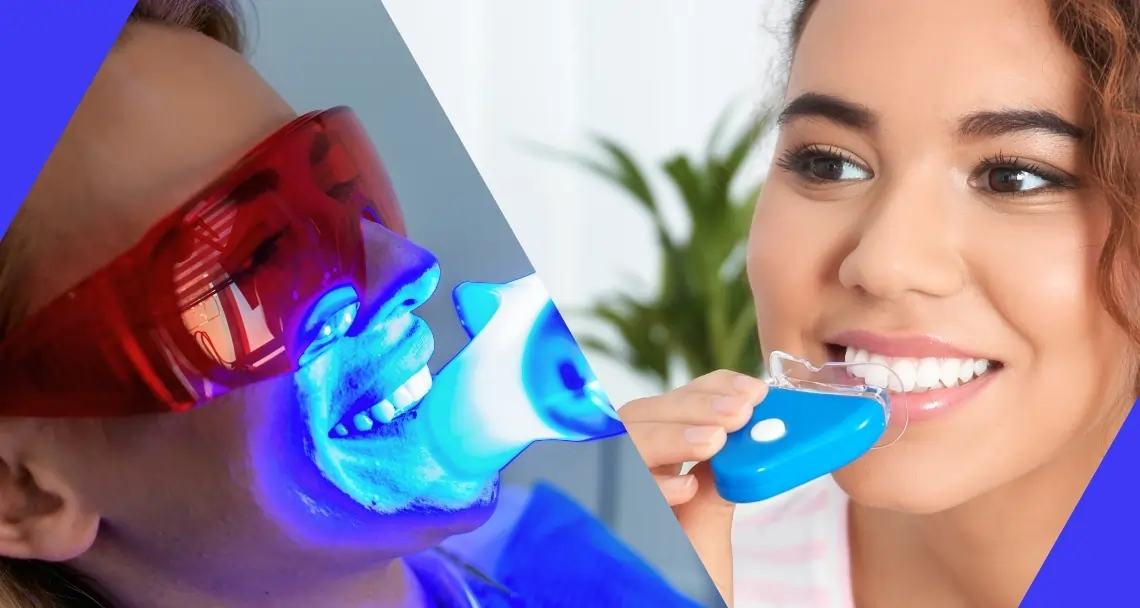
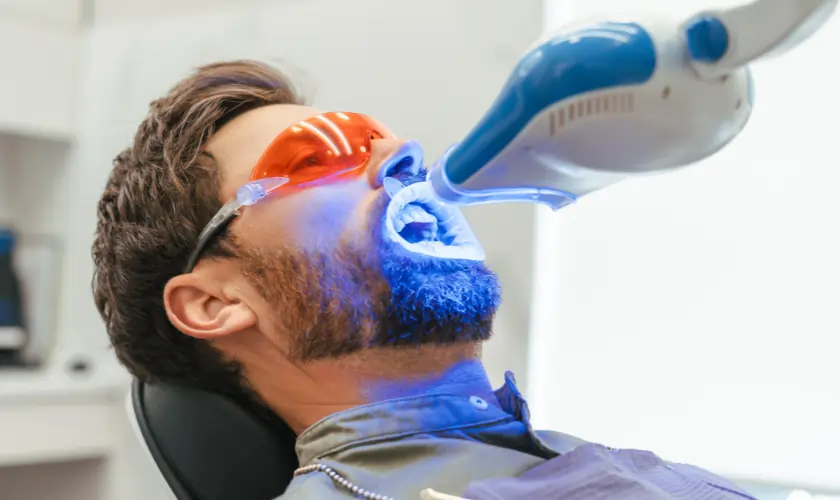
The process is fairly straightforward. A whitening gel (usually containing peroxide) is applied to the teeth, and then a laser or specialised light is used to activate it. This speeds up the chemical reaction that breaks down stains sitting on and within the enamel.
What makes it different from at-home kits is the intensity and precision. The treatment is done under controlled conditions, which means:
- Stronger whitening agents can be used safely
- Results are visible almost immediately
- The shade change is more even
Most people walk away after a single session with a noticeably brighter smile, often several shades lighter.
It’s not magic—but it’s pretty close compared to slower alternatives.

Can You Still Drink Coffee After Laser Teeth Whitening?
Short answer: yes—but timing matters.
Your teeth are also more sensitive and more prone to staining immediately after the treatment. And there we understand a part of the reason that hoodie moisture professionals recommend skipping coffee (and more black liquids) for 24 to 48 hours. Decoding Dry Mouth: Uncovering the Hidden Dangers Beyond Discomfort Macclesfield
After that time period, feel free to sip your coffee like usual. The trick is how you do it:
- Do not slowly sip it for prolonged periods
- Afterwards, rinse your mouth with water
- Do not brush immediately (20–30 minutes)
- For iced coffee, use a straw
You should not have to give it up — you just need to be a little bit more intelligent about it.
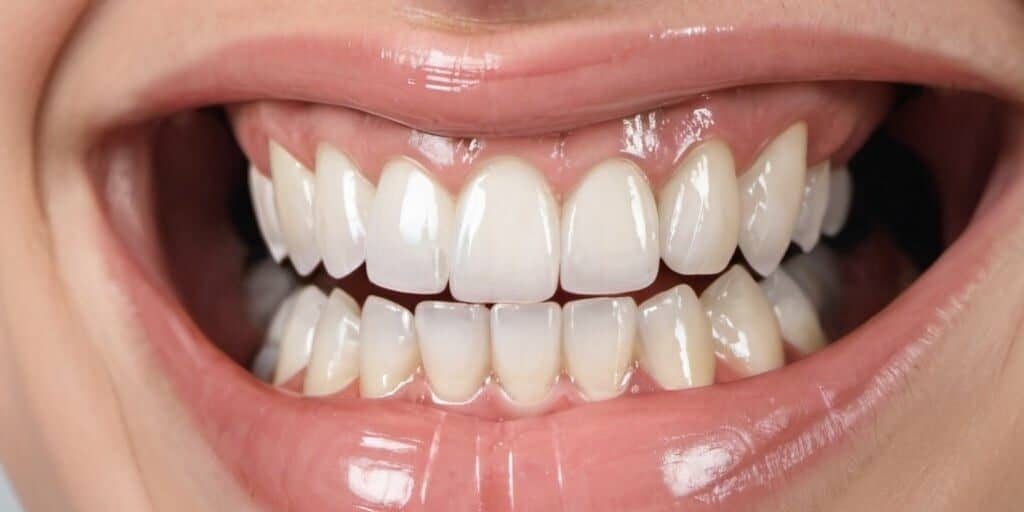
What Are the Long-Term Effects of Laser Teeth Whitening for Coffee Drinkers?
For coffee drinkers, the long-term effects are mostly about maintenance rather than damage.
Laser whitening itself doesn’t harm your teeth when done properly. However, over time, coffee will gradually reintroduce stains. The difference is that after laser teeth whitening, people tend to be more aware of their habits, which slows that process down.
Here’s what most coffee drinkers notice long-term:
- Their teeth don’t go back to their original shade quickly
- Stains return gradually rather than all at once
- Top-up treatments become easier and less intensive
- They become more conscious of staining foods and drinks
Another interesting effect is behavioural. Many people naturally reduce how much coffee they drink—not because they have to, but because they don’t want to lose their results.
So while coffee will always have some impact, it becomes manageable rather than frustrating.
Is Laser Teeth Whitening Worth It for Coffee Drinkers?
For most people, the answer is yes—but with realistic expectations.
Laser whitening gives you a clean slate. It won’t make your teeth permanently stain-proof, but it will significantly improve their appearance in a short amount of time. For coffee drinkers, that alone can be worth it. Cosmetic Dentistry Made Easy: Mastering the Art and Science Macclesfield
The value really depends on how you maintain it afterwards. If you go straight back to constant sipping without any care, the results will fade faster. But if you make small adjustments, you’ll get far more out of it.
Think of it less like a one-time fix and more like part of your routine—similar to a haircut or skincare treatment.
FAQs
Q: How long does laser teeth whitening Macclesfield last if I drink coffee every day?
Results depend on habits and maintenance, but typically last from 6 months to 2 years for most people.
Q: Will laser teeth whitening make my teeth extra sensitive Macclesfield?
Some people experience temporary sensitivity, but it usually settles within a few days.
Q: Is it okay to brush my teeth immediately after coffee?
Better to wait for 20–30 min. Coffee, being acidic, softens enamel, and brushing right after results in wear of enamel.
Q: Do I need to eliminate coffee Macclesfield?
No, not at all. Recommended daily, but only if you watch how often and the way you drink it.
Q: Are top-up treatments necessary?
Not always, but occasional top-ups help maintain brightness, especially for regular coffee drinkers.